Ask ten people why they chose a particular cross-border taxi and you’ll hear the same answer nine times: someone recommended it. That’s not a bad way to pick, but it skips the question that actually matters on a trip like this. What does “reliable” mean when your car has to leave one country, enter another, and still get you to a hotel in Malacca before check-in closes?
The drive itself is simple. The reliability comes from everything wrapped around it: whether the driver turns up when promised, whether the car is allowed to cross, whether anyone has thought about the border queue, and whether the price you were quoted is the price you pay. This guide breaks down each of those, then walks through how to spend the day once you arrive.
What Reliable Actually Means on This Route
A taxi from Singapore to Malacca covers roughly 220 to 250 km, depending on where you start and which checkpoint you use. Most trips land between 3 and 4 hours door to door, and that spread is the heart of the reliability question. The road is the predictable part. The border is not.
Here is what separates a dependable ride from a gamble.
- The driver is on time and tracks your plans. For airport pickups, a good operator watches your flight status and adjusts the pickup rather than leaving you waiting at Changi because your plane landed forty minutes late.
- The vehicle is cleared for cross-border travel. Not every car in Singapore is set up to enter Malaysia. A properly arranged cross-border taxi already has its permits and insurance sorted, so nothing gets discovered at the checkpoint.
- The price is agreed before you set off. Fixed pricing matters more than people realize on a long ride. Metered fares across a border, with waiting time added, can turn into a surprise by the time you arrive.
There is a plan for the queue. This is the one most people overlook, and it’s worth a closer look.

The Border Is the Real Variable
Roughly speaking, the stretch from Singapore to the Malaysian side takes anywhere from 15 minutes on a quiet weekday to well over two hours around public holidays and school breaks. Immigration authorities in Singapore have publicly warned about waits beyond two hours at Woodlands during heavy holiday periods, and travellers are regularly advised to expect the worst on Friday evenings.
Two checkpoints serve cars. Woodlands is the busier of the two, while Tuas Second Link is often lighter but adds some driving on the Malaysian side because it lands further west. Neither is always faster, which is why experienced drivers check live conditions on the day instead of defaulting to one route.
For you as a passenger, this is where a taxi earns its keep. You stay seated in the car through both sets of immigration, the driver handles the queue strategy, and you’re not standing in a terminal with luggage while a coach waits to reload. If you have flexibility, leaving on a weekday morning or mid afternoon avoids the worst of it. If you don’t, at least you’ve chosen the transport that handles a long queue most comfortably.
How a Booking Should Work
A reliable operator keeps the process short and clear. You tell them your pickup address, drop-off point in Malacca, date, time, number of passengers, and how much luggage you’re bringing. You get a price and a confirmation back quickly. If anything about that exchange feels vague, it’s worth asking questions before you commit.
A few details are worth confirming up front:
- Whether the quoted price includes tolls and the border crossing
- What vehicle size fits your group and bags
- How the driver will contact you on the day
- What happens if your plans change or your flight is delayed
Good operators answer these without making you chase them. If you’re travelling with children, elderly parents, or a lot of luggage, mention it at booking so the right vehicle turns up.
A Realistic Timeline for the Day
Here’s what a typical morning departure looks like, with honest buffers built in.
An 8:00am pickup in Singapore usually means reaching the checkpoint by around 8:45. On a good day you’re through both immigration points by 9:30. From there, the run up the North-South Expressway takes roughly two hours, which puts you in Malacca around 11:30, in time for an early lunch.
Add a rest stop to that. Drivers often use the Ayer Keroh rest area, about 30 minutes from Malacca, and families sometimes break the trip at Yong Peng, a small town known for its Hakka food, if the kids need a proper stretch. On the way back, Skudai’s rest area is a convenient final stop before the checkpoint.
If your trip lands on a long weekend, add an hour or two to the border portion and tell your hotel you may arrive later than planned.
What to Do Once You’re in Malacca
Most guides send everyone to the same three spots. Malacca rewards a bit more curiosity, so here’s a route that mixes the famous with the less crowded.
Start with the water: Malacca Straits Mosque
Built on a man-made island just off the coast, this mosque appears to float at high tide, which is why it’s so popular at sunset. It’s open to visitors outside prayer times, and it’s worth dressing modestly and checking the timing before you go. It sits a short drive from the town centre, so a taxi or private car saves you the awkward trip with public transport.
Kampung Morten and the Portuguese Settlement
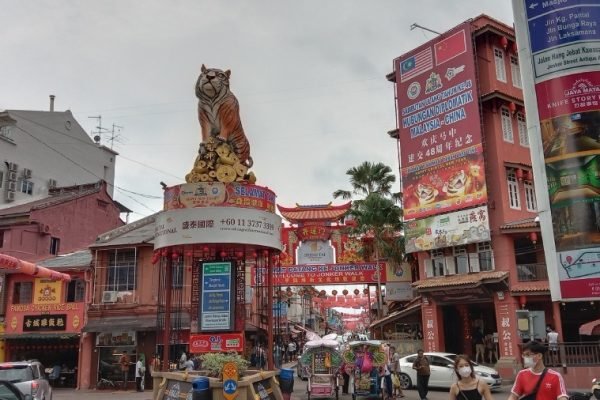
These two neighbourhoods give you a different side of Malacca than the red buildings in the old centre. The Portuguese Settlement is home to the Kristang community, whose heritage blends Portuguese and Malay roots, and Kampung Morten is one of the few remaining traditional Malay villages in the city. Both are quieter than Jonker Street and better for slow wandering.
Menara Taming Sari
A revolving tower rising 110 metres, with a glass cabin that gives you a full circle view of the old town, the river, and the coastline. It’s a short walk from Dutch Square, so it fits neatly into a day centred on the historic core. Go on a clear afternoon and skip it on hazy days, since the view is the entire point.
A walk through the old town
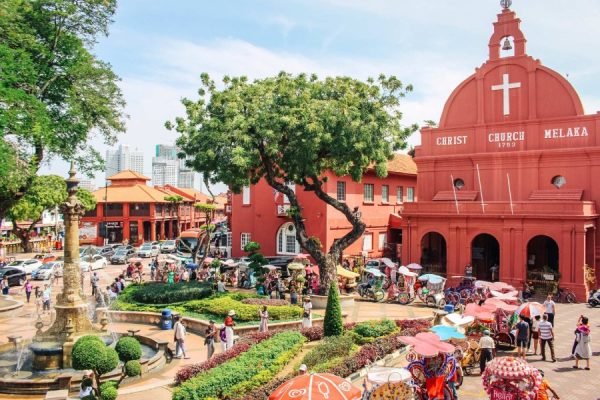
Spend a couple of hours between Dutch Square, Christ Church, the Stadthuys, and the climb up St. Paul’s Hill. This is the classic Malacca loop, and it works best early or late when the heat is lower. Add Cheng Hoon Teng Temple and Kampung Kling Mosque if you want to see how closely different communities have lived side by side.
Pantai Klebang for sunset and a coconut shake
Malacca isn’t really a swimming destination, but Pantai Klebang is a wide, breezy stretch of sand that locals head to in the late afternoon. The Klebang coconut shake, a blend of fresh coconut, ice, and ice cream, is the local ritual here. Opening hours vary and queues build quickly, so it’s worth checking before you set off.
If you’re travelling with kids
Zoo Melaka is the usual swap for a day with younger children, and it pairs well with a lighter afternoon in the old town rather than a packed heritage itinerary.
What to Eat
Malacca’s food is half the reason people make the trip, and it’s easy to eat well without a plan.
- Chicken rice balls are the city’s signature twist on Hainanese chicken rice, with the rice shaped into small balls.
- Nyonya dishes such as laksa and ayam pongteh reflect the Peranakan cooking that Malacca is known for.
- Cendol is the right answer to the afternoon heat.
- Kaya toast and kopi at an old kopitiam make a good first stop if you’ve arrived hungry.
Tell your driver what you’d like to eat and they can often suggest where to go, especially for places outside the centre like Klebang.
Is a Day Trip Enough?
You can cover the old town, one meal you’ll remember, and a sunset in a single day, but it’s a full one with the drive both ways. An overnight stay changes the experience. You arrive without a clock ticking, walk Jonker Street when it’s alive in the evening, and leave the next morning after a slower start. If you can spare the night, it’s the version of the trip people tend to remember best.
Why Travellers Book SGMYLIMOTAXI for This Route
SGMYLIMOTAXI runs door-to-door transfers between Singapore and Malacca, with pickups from homes, hotels, and Changi Airport. You choose the departure time that suits your plans, from an early start to a late evening run, and ride in an air-conditioned vehicle sized to your group. The driver handles the checkpoint process while you stay in the car, and you’re taken directly to your Malacca destination without transfers.
If your trip is built around a hotel check-in, a reservation, or a flight, the point of booking a private ride is knowing the rest of your day isn’t hostage to a bus timetable.
Book Your Ride to Malacca
A reliable taxi doesn’t make the border shorter. It makes the border something you sit through comfortably instead of something you plan your whole day around. Tell SGMYLIMOTAXI where you’re starting, when you want to leave, and who’s travelling, and the rest follows from there.
Book your taxi from Singapore to Malacca with SGMYLIMOTAXI and put the logistics in someone else’s hands.
Frequently Asked Questions
How long does a taxi take from Singapore to Malacca?
Most trips take between 3 and 4 hours door to door, including the border crossing. Driving time on the Malaysian side is around two to two and a half hours, but checkpoint queues can add significantly during weekends and holidays.
How far is Malacca from Singapore by road?
Roughly 220 to 250 km, depending on your pickup point in Singapore and which checkpoint is used.
Do I need to leave the taxi at the border?
Not usually. In a private cross-border taxi, passengers generally stay in the vehicle while the driver manages the queue and clearance process on both sides.
Which checkpoint is faster, Woodlands or Tuas?
It changes by day and hour. Woodlands is typically busier, and Tuas is often lighter but adds some driving on the Malaysian side. Experienced drivers check live conditions before choosing.
What is the best time to travel to avoid long queues?
Weekday mornings and mid afternoons are generally calmer. Friday evenings, Saturday mornings, school holidays, and the days before public holidays are the busiest.
 by