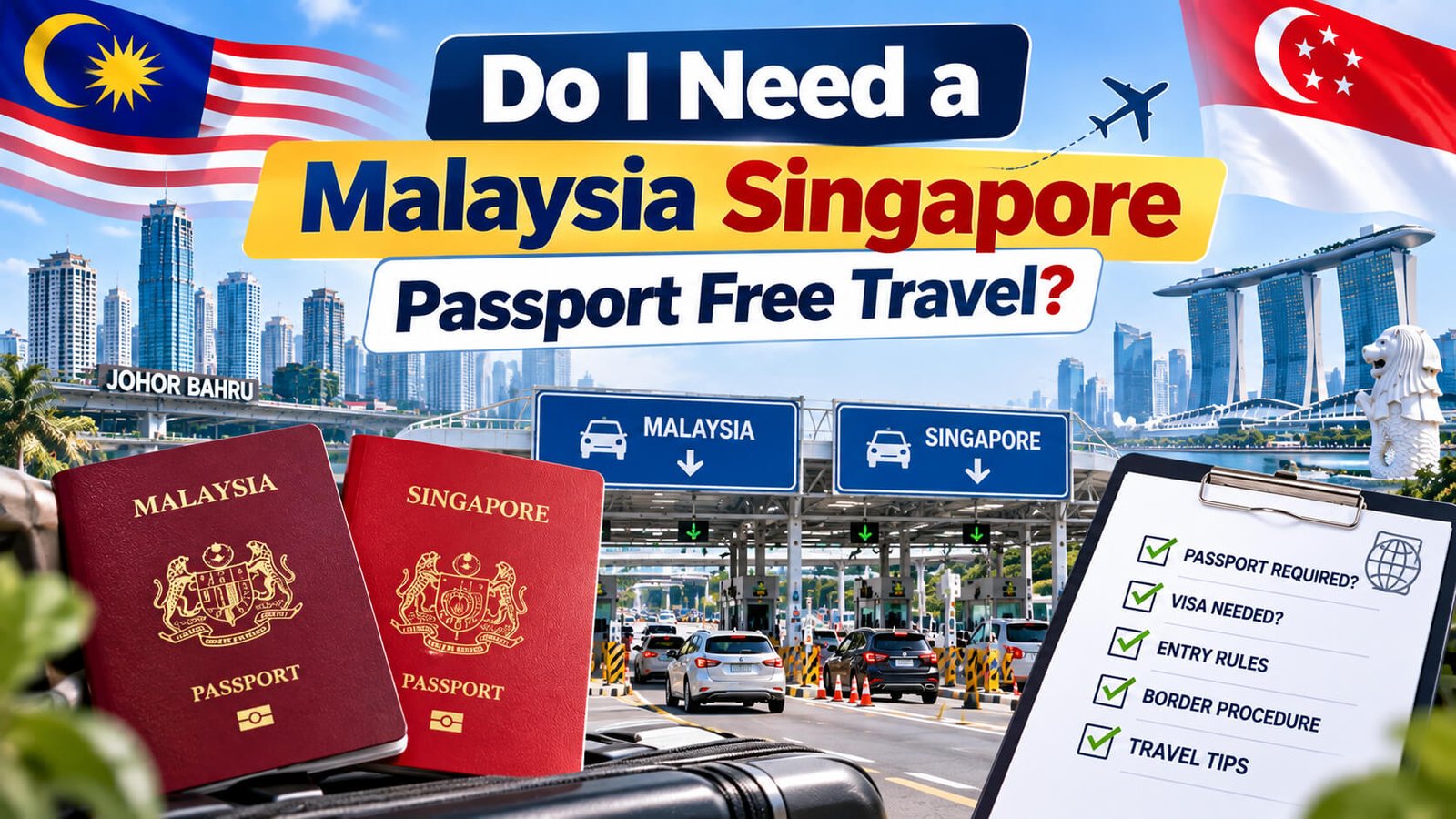
No, there is no such thing as Malaysia Singapore passport-free travel. Every traveler, regardless of nationality, must carry a valid passport to cross the border between Singapore and Malaysia, whether by car, bus, train, or on foot. What people often mean by “passport-free” is actually visa-free entry or the automated biometric gates that speed up clearance but a physical or digital passport is still required in both cases.
This article clears up the confusion, explains exactly what documents you need, and covers what “passport-free” really refers to when people search for it.
Is There Really Passport-Free Travel Between Singapore and Malaysia?
There is no passport-free travel arrangement between Singapore and Malaysia for any nationality, including citizens of both countries. Both nations operate independent immigration systems at every checkpoint, and each requires passport verification on both exit and entry, every single time you cross.
This applies even to Singaporeans and Malaysians who cross daily for work. Long-term commuters do not skip passport checks; they use faster processing methods, like automated gates, but they still tap or scan a passport at each crossing. There is no shared “open border” model between the two countries, unlike arrangements such as the EU’s Schengen Area.
Why Do People Search for “Passport-Free Travel”?
Most people searching this term are actually asking about one of three things: visa-free entry, automated/biometric gates that don’t require handing a passport to an officer, or general confusion about how simple the crossing process is. None of these actually mean travel without a passport.
Here’s what each of those actually refers to:
| What People Mean | What It Actually Is |
| “No visa needed” | Visa-free entry for eligible nationalities passport still required |
| “I didn’t hand my passport to anyone” | Automated gates that scan your passport electronically |
| “It’s so quick and easy” | Fast processing due to biometric systems, not an absence of passport checks |
| “Locals cross without hassle” | Frequent commuters use automated lanes, still passport-based |
Visa-Free Travel vs Passport-Free Travel: What’s the Difference?
Visa-free travel means you don’t need to apply for a visa in advance, but you still need a valid passport to enter. Passport-free travel would mean no travel document is required at all and that does not exist for Singapore-Malaysia crossings.
Malaysia grants visa-free entry to most nationalities for social or business visits, with the allowed stay length varying by passport commonly 30, 60, or 90 days Singapore similarly allows visa-free entry for many nationalities for short visits.
Visa-free simply removes one piece of paperwork from the visa application. It does not remove the passport requirement, and it does not remove the need to complete arrival documentation like Malaysia’s Digital Arrival Card (MDAC).
What Documents Do You Actually Need to Cross?
Every traveler crossing between Singapore and Malaysia needs a valid passport at minimum, plus additional digital arrival documentation depending on direction of travel. There is no scenario where a passport can be skipped.
Minimum requirements for all travelers:
- A valid passport with at least 6 months of remaining validity from your date of entry into Malaysia.
- Malaysia Digital Arrival Card (MDAC) completed online before arrival in Malaysia, required for all foreign nationals.
- SG Arrival Card required if re-entering Singapore, submitted digitally in advance.
Additional requirements for drivers:
1. VEP (Vehicle Entry Permit) tag for Singapore-registered vehicles entering Malaysia.
2. Valid road tax and insurance checked at Malaysian entry for vehicles.
None of these replace the passport. The MDAC and SG Arrival Card are pre-arrival declarations, not passport substitutes you still present your passport at the counter or automated gate regardless of having completed them.
What Are the Automated Gates at Singapore-Malaysia Checkpoints?
Automated immigration gates at Singapore-Malaysia checkpoints use biometric verification such as fingerprint or facial recognition to clear travelers faster than manual counters, but they still require a passport to be scanned at the start of the process. This is likely the biggest source of “passport-free” confusion.
How automated gates work:
- You insert or scan your passport at the gate.
- The system verifies your identity using biometric data linked to your passport or prior enrollment.
- The gate opens once verification is complete, usually within seconds.
Frequent travelers, including many Singaporean and Malaysian commuters, are enrolled in these systems for faster processing. The process feels quick and seamless, which is likely why some travelers describe it as “passport-free” but the passport scan is still the first and required step.
Are There Any Exceptions for Locals or Frequent Travelers?
No, even Singapore and Malaysia citizens who cross the border daily for work still need a passport for every crossing. What differs for frequent travelers is speed, not the requirement itself.
Long-term cross-border commuters typically use dedicated automated lanes with biometric enrollment, which significantly reduces processing time compared to first-time or infrequent travelers using manual counters. But the underlying rule is identical: no passport, no crossing, regardless of how many times you’ve done it before.
What Happens If You Forget or Lose Your Passport?
If you forget or lose your passport, you cannot cross the Singapore-Malaysia border under any circumstances, including emergency or last-minute travel. There is no manual override, verbal identification, or alternate document that substitutes for a passport at these checkpoints.
If your passport is lost while already in Malaysia or Singapore, you’ll need to contact your country’s embassy or high commission to arrange an emergency travel document before you can cross back. This process can take anywhere from several hours to a few days depending on your nationality and the embassy’s processing time, so travelers should always check passport validity well before their trip.
Passport Validity Requirements You Should Check Before Traveling
Malaysia requires passports to have at least 6 months of validity remaining from the date of entry, and travelers should confirm Singapore’s requirements as well before departure. A passport nearing expiry is one of the most common reasons travelers are denied entry or turned back at the counter.
Before your trip, check:
- Passport expiry date (minimum 6 months validity recommended)
- Number of blank passport pages remaining, if applicable to your nationality
- Your specific visa-exemption period for Malaysia based on your passport
- Whether your passport type requires any additional pre-arrival registration
How This Affects Your Trip Planning
Since a passport is always required, the real planning question isn’t whether you need one it’s how to make the passport-and-immigration process as smooth as possible. This matters most for travelers on a schedule, such as catching a flight from Johor Bahru, attending a meeting, or connecting to onward destinations like Kuala Lumpur or Malacca.
Travelers who book a private car from Singapore to Johor Bahru still go through the same passport checks as everyone else, but avoid the added friction of switching vehicles, managing luggage through a queue, or navigating unfamiliar public transport terminals on either side. This is particularly useful for families or travelers carrying documents, laptops, or valuables who want to keep everything with them through the crossing rather than transferring between vehicles.
Frequently Asked Questions
Can I cross from Singapore to Malaysia without a passport?
No. A valid passport is required for every crossing between Singapore and Malaysia, regardless of nationality, transport mode, or how frequently you travel. There is no exception.
Is Singapore-Malaysia travel visa-free?
For many nationalities, yes — Malaysia and Singapore both offer visa-free entry for short visits, with the allowed duration depending on your passport. However, “visa-free” only removes the visa application requirement; a passport is still mandatory.
What is the automated gate system at Singapore-Malaysia checkpoints?
It’s a biometric verification system that scans your passport and confirms your identity using fingerprint or facial recognition, allowing faster processing than a manual counter. You still need to scan your passport to use it.
Do Singapore and Malaysia citizens need a passport to cross?
Yes. Even citizens of both countries, including daily commuters, must present a passport at every crossing. Frequent travelers may use faster automated lanes, but the passport requirement remains the same.
What happens if my passport is about to expire?
Malaysia generally requires at least 6 months of passport validity remaining from your entry date. If your passport doesn’t meet this, you may be denied entry, so renew it before booking your trip.
Final Thoughts
Malaysia Singapore passport-free travel is a myth every traveler needs a valid passport to cross, no matter how fast or seamless the process feels thanks to automated gates and visa-free entry. What has genuinely improved over the years is speed and convenience, not the fundamental requirement to carry a passport.
If you want the crossing itself to feel as effortless as possible, pairing your prepared documents with a private car from Singapore to Johor Bahru removes the logistical friction around the passport check, letting you focus on your onward trip rather than the checkpoint process itself.
 by